So let’s cut through the noise on the environmental debate around window materials — specifically timber vs uPVC.
There’s no denying that uPVC has practical benefits. It’s affordable, low-maintenance and widely available. But environmentally? It has challenges:
• PVC production relies heavily on non-renewable petrochemicals
• Recycling is technically possible, but in reality, very limited. Studies show around 82% of PVC waste goes to landfill, with only an estimated 3% recycled.
• uPVC often contains stabilisers, fillers and additives which complicate its disposal.
• When burned or overheated, PVC releases toxic gases – another factor in its environmental footprint.
This doesn’t make uPVC “bad”, but it’s important that homeowners understand the true lifecycle impact.
Timber, when sourced responsibly, is one of the most environmentally positive building materials available.
Here’s why:
• It’s renewable and acts as a carbon store throughout its life.
• It has a significantly lower embodied energy compared to uPVC or aluminium.
• It can be repaired, refurbished and repainted instead of replaced.
• It has a far simpler and cleaner end-of-life path.
At GBS Joinery, we choose sustainably certified timber not because it’s trendy, but because it’s the right thing to do – for our customers and for the planet. Our commitment to Trust, Care and Excellence is reflected in every timber window and door we craft.
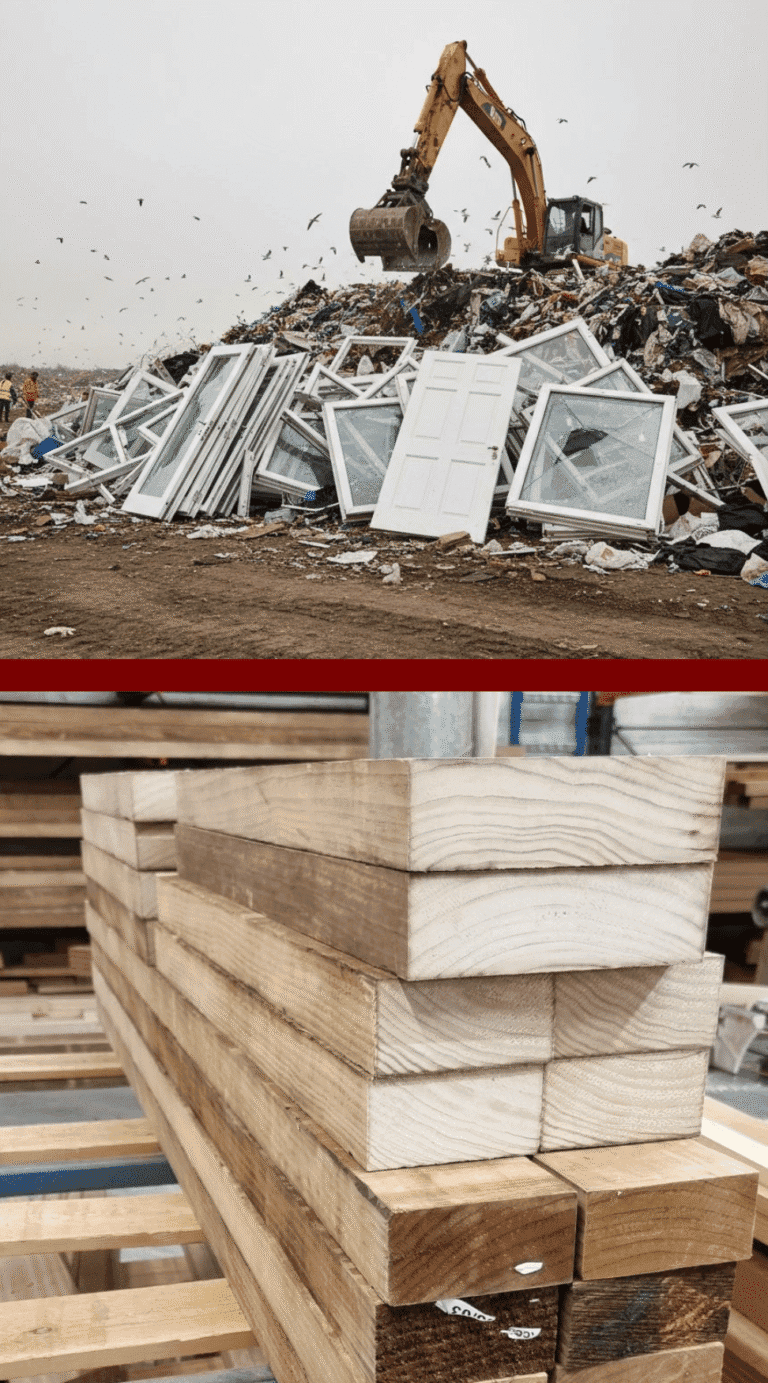
One study found that wooden frames can save 140–160 kg CO₂e over 60 years compared to uPVC. Timber’s lower embodied energy and longer service life make it the clear environmental winner in most lifecycle assessments.
uPVC’s legacy is complicated: special processing, higher cost waste streams, and chemical additives that don’t simply “disappear”. Wood, on the other hand, biodegrades or can be repurposed with minimal environmental harm.
This is where craftsmanship matters. A well-made timber window or door doesn’t just look beautiful, it lasts. And when properly maintained, it outperforms many alternatives throughout its lifespan.
Choosing windows isn’t just about style – it’s about impact. Environmental impact. Lifetime cost. Repairability. Safety. Craftsmanship.
At GBS Joinery, we help clients make choices that support their home, the planet and future generations. Because good joinery isn’t just built for today — it’s built to endure.
Talk to a member of our team today about our safe, sustainable, long-lasting window and door solutions.
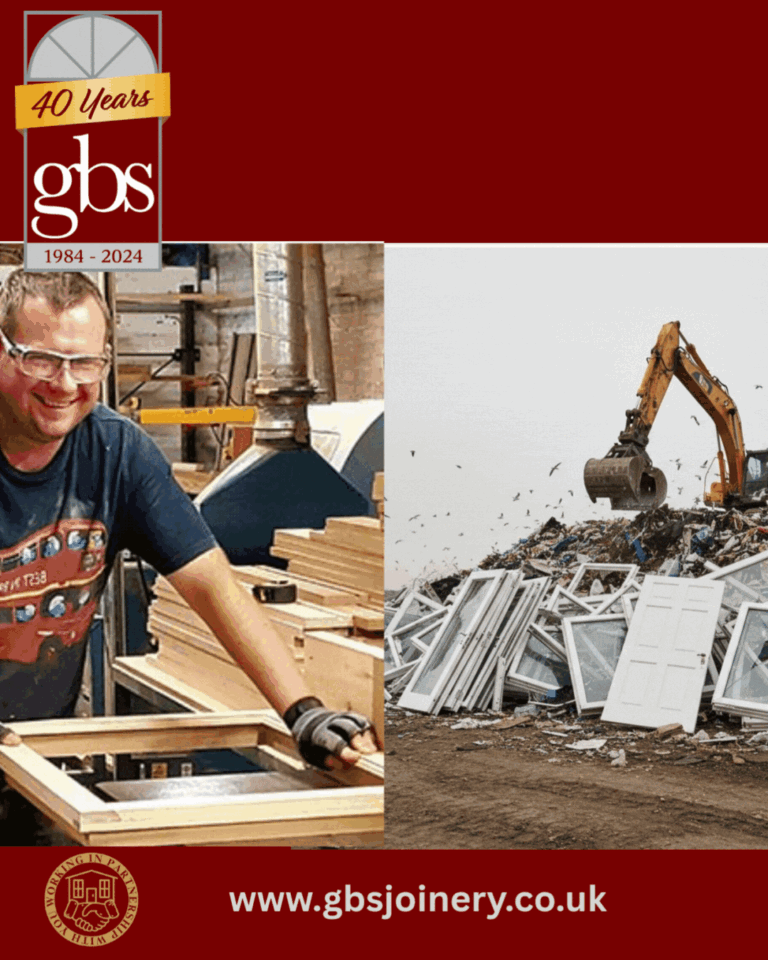

• See examples of our work on our Case Studies page
• Explore our Windows Gallery and Doors Gallery
• Read our Customer Testimonials
Contact us for a free, no obligation consultation!

We discuss with you the best solutions and applications for your needs, helping you to make informed decisions about your joinery needs.
We are always pleased to freely provide the best possible information and advice. We welcome your call so please do contact us.
We use cookies to improve your experience on our site, to personalise content, and analyse our traffic. By clicking on the 'Accept' button, you consent to cookies.
Manage your cookie preferences below:
Essential cookies enable basic functions and are necessary for the proper function of the website.